.png)
Does the direction you sleep in really matter? Some traditional systems believe it can affect how restful your sleep feels, while modern sleep advice tends to focus more on comfort, routine, and environment.
In this article, we look at what different sleeping directions are believed to mean and what actually matters most for better sleep.
Which Direction to Sleep Scientifically
From a traditional perspective, sleeping with the head pointing south or east is often considered the most favourable. These directions are commonly linked with calmer rest, better focus, and a more balanced sleep routine.
However, modern sleep advice places more emphasis on practical factors such as comfort, room temperature, light exposure, noise, bedding quality, and a consistent bedtime routine. So while sleeping direction may be worth considering, it should not replace the basics of good sleep hygiene.
How Sleeping Direction Affects Sleep and Health
Sleeping direction is believed to influence sleep quality and overall health in relation to the body’s alignment with Earth’s natural magnetic field. Traditional systems such as Ayurveda and Vastu suggest that certain directions may support a calmer body and mind during rest.
The 4 Main Sleeping Directions
Sleeping with Your Head Pointing South
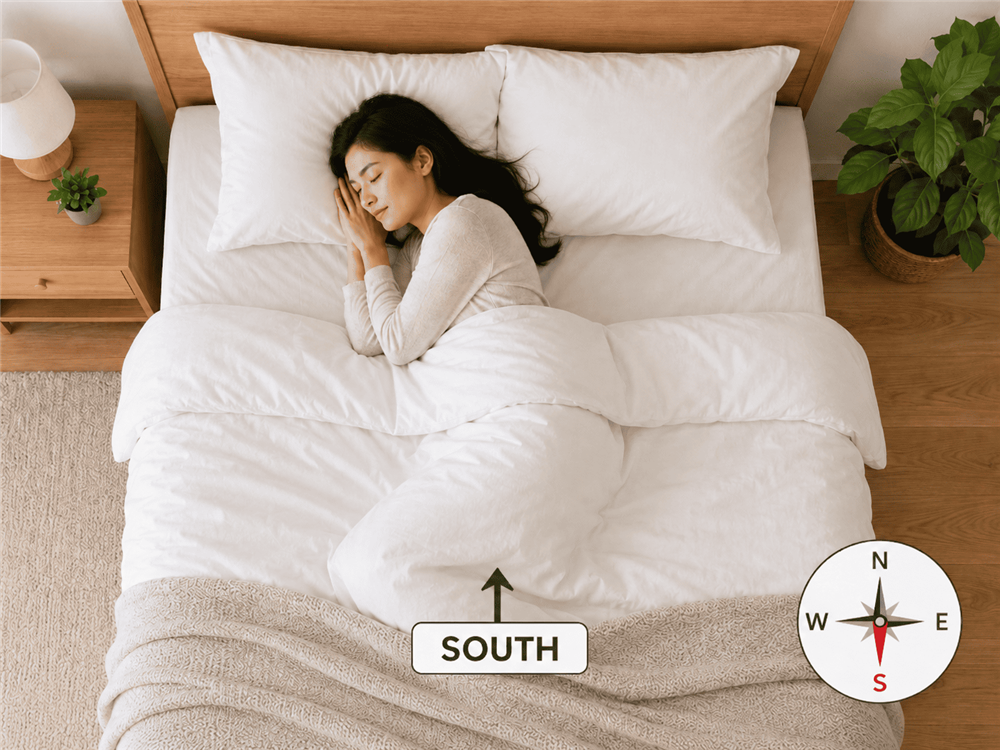
South-Facing Orientation involves sleeping with the head pointing South, traditionally believed to harmonise the body with Earth’s magnetic field. It is associated with calmer nervous function, cardiovascular stability, deeper rest, and reduced stress, especially for people who tend to feel more restless or anxious, which Ayurveda sometimes describes as ‘Vata-dominant’.
Sleeping with Your Head Pointing East
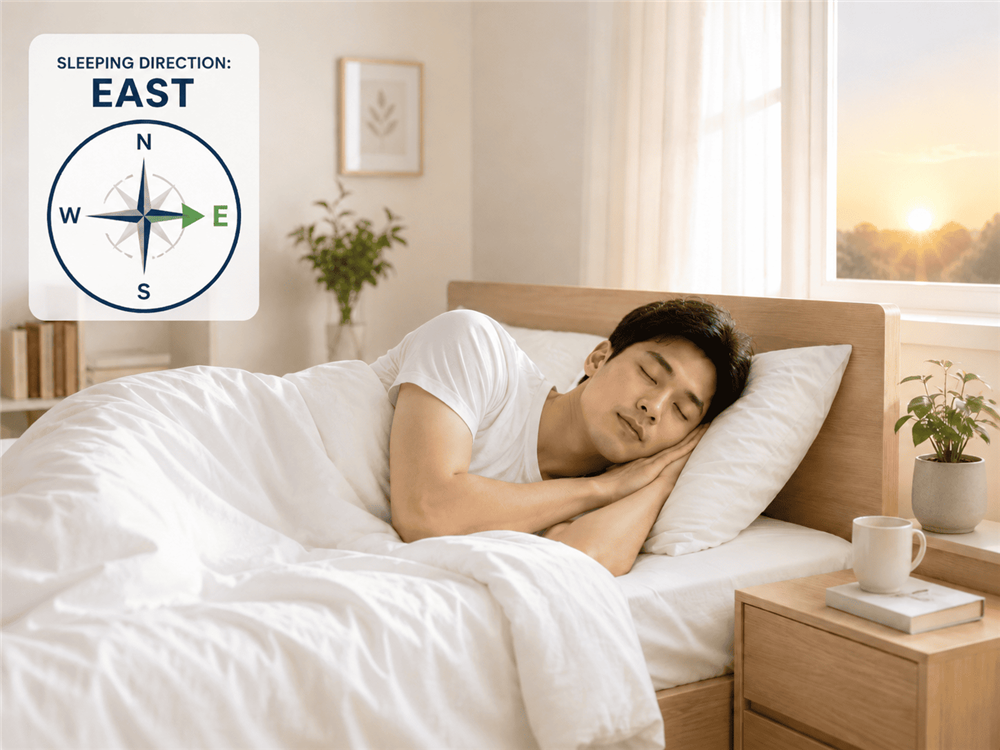
East-facing sleep is commonly associated with renewal, alertness, and mental clarity. It is often recommended for students, working adults, and people who want to feel more focused during the day.
Sleeping with Your Head Pointing North
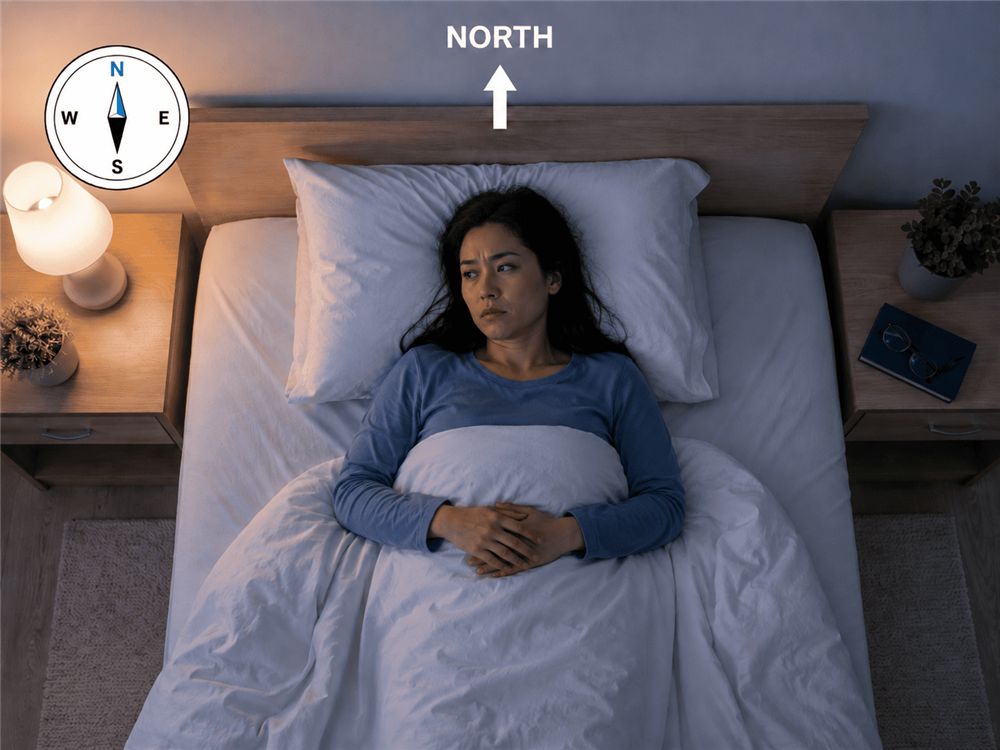
North-facing sleep is traditionally discouraged in Ayurveda. It is believed to be less suitable for restful sleep, and some people may feel more restless when sleeping in this direction.
Sleeping with Your Head Pointing West
.png)
West-facing sleep has mixed interpretations. Some traditions associate it with ambition and activity, while others suggest it may not be the most calming direction for deep rest.
Key Considerations
Biological Instincts and Animal Behaviour
Biological instincts and animal behaviour indicate that many animals naturally align north–south with Earth’s magnetic field during rest. Observations of cattle and deer suggest that geomagnetic sensitivity supports physiological balance.
This raises the possibility that humans may also respond subtly to magnetic alignment, potentially affecting brain activity, REM sleep, and overall sleep depth.
Hemispheric Differences
Hemispheric differences explain how sleeping-direction advice may vary by geographic location due to Earth’s magnetic polarity. North-facing sleep is often discouraged in the Northern Hemisphere, but recommendations may be reversed in the Southern Hemisphere.
However, differing expert views suggest that personal comfort, health response, and environment should ultimately guide sleeping-direction decisions.
What Matters More for Better Sleep
Regardless of sleeping direction, your sleep environment plays a major role in how well you rest. A cooler, darker, and quieter bedroom can make it easier for the body to relax and maintain deeper sleep.
To create a more comfortable sleep setup:
- Keep the bedroom cool: A temperature of around 18–20°C can help support the body’s natural cooling process during sleep.
- Reduce light and noise: Use blackout curtains, sleep masks, or white noise to minimise disruptions.
- Watch your evening habits: Avoid caffeine late in the day, and try not to eat heavy meals or drink alcohol too close to bedtime.
- Position the bed comfortably: Place the bed in a way that feels secure, practical, and relaxing for your space.
Bedding Quality
Choosing breathable, high-quality bed sheets made from natural fabrics such as cotton or linen that helps regulate body temperature and wick away moisture during sleep. Comfortable bedding reduces overheating and irritation, supports uninterrupted rest, and contributes to a more relaxing sleep.
Best Bedding Brand for Cooler, Deeper Sleep
AKEMI has been Malaysia’s No. 1 bedding brand consecutively since 2012 (based on Nielsen Research 2023), built around sleep comfort suited to real tropical nights. From breathable bed linen choices like AKEMI TENCEL™, made with genuine TENCEL™ fibres that support moisture management and airflow, to cooling-focused innovations such as Outlast® technology that helps manage heat build-up, AKEMI products are designed to reduce overheating that disrupts sleep. For families upgrading their sleep environment, AKEMI also offers pillows, quilts, and bath essentials, making it easier to build a consistent, comfortable wind-down routine at home.
Shop AKEMI to upgrade your sleep setup with breathable, cooling bedding that helps you wake up feeling restored.
FAQs
What is the best sleeping direction for good health?
Traditional systems like Ayurveda suggest sleeping with the head pointing south or east. These directions are believed to support regulated nervous system activity, healthier blood circulation, and improved sleep quality, though personal comfort and overall sleep hygiene remain the most important factors.
Why is sleeping with the head pointing north discouraged?
North-facing sleep is traditionally discouraged because it is believed to repel Earth’s magnetic field, potentially affecting blood circulation and nervous system balance. Some people report restlessness, headaches, or poor sleep quality when sleeping in this direction.
Does sleeping direction really affect sleep quality?
Sleeping direction may subtly influence sleep through its effect on the body’s nervous system and blood circulation. However, scientific evidence is limited, and factors such as sleep environment, routine, and comfort play a much larger role in determining overall sleep quality.
Which sleeping direction is best for working adults and mental clarity?
Sleeping with the head pointing east is often recommended for working adults and professionals. Traditionally, this direction is associated with mental alertness, memory, concentration, and smoother sleep cycles that may support cognitive performance.